One of the most important questions during software development is how many defects are likely to be discovered in the coming weeks.
Traditional Software Reliability Growth Models (SRGMs) primarily focus on estimating reliability growth and residual defects. While these models provide valuable insights, modern software organizations often require more detailed visibility into the future behavior of defect arrivals.
The Main Prediction Model (MPM) was developed to forecast future defect-arrival trends and provide early visibility into software quality conditions before release.
01 / Predictive quality
Why Defect Arrival Forecasting Matters
Defect arrivals provide an important indicator of software quality and project stability.
Understanding future defect arrivals helps organizations:
- Evaluate testing effectiveness
- Assess software quality trends
- Plan testing resources
- Estimate remaining workloads
- Support release decisions
- Identify emerging risks
Without predictive visibility, organizations must rely primarily on historical defect counts and subjective judgment.
Defect arrival forecasting provides a more proactive approach.
02 / Predictive quality
Defect Arrival Curves
During testing, defect arrivals typically follow recognizable patterns. Examples include:
- Rapid growth during early testing
- Gradual stabilization during later testing
- Multiple discovery waves
- Periods of accelerated defect discovery
Modern software projects frequently exhibit complex behaviors that are difficult to represent using a single reliability growth model.
Understanding these patterns is essential for accurate forecasting.
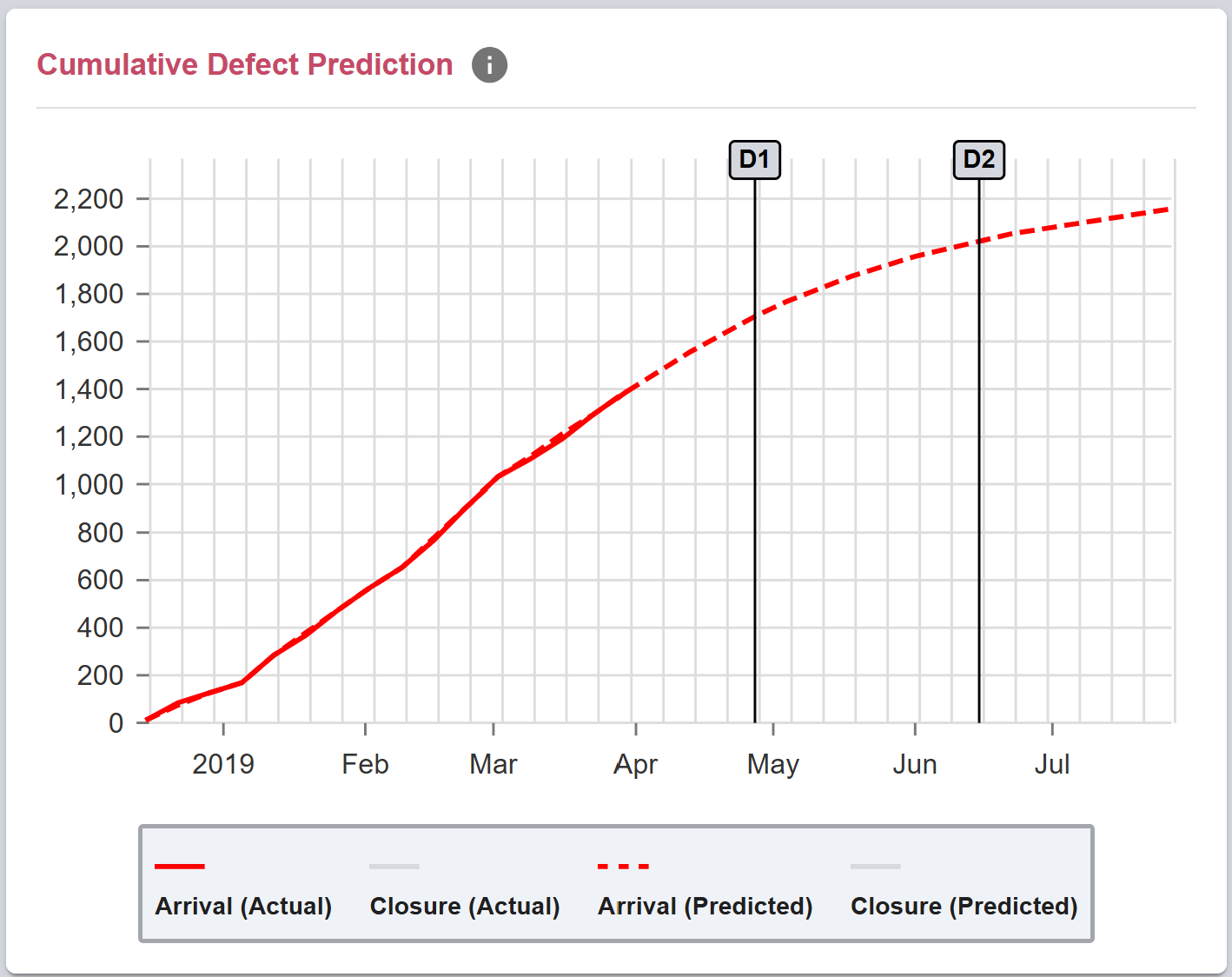
Figure 1 / Defect Arrival Forecast Using MPM
03 / Predictive quality
The Main Prediction Model (MPM)
Adaptive Defect Arrival Forecasting
The Main Prediction Model (MPM) was developed to improve forecasting accuracy in environments where defect discovery behavior changes over time.
Unlike many classical reliability growth models that assume a single defect discovery process, MPM supports adaptive forecasting based on observed project behavior.
The model continuously evaluates historical defect-arrival data and identifies trends that may affect future defect discoveries.
This allows organizations to forecast future arrival trajectories with greater flexibility and accuracy.
Key Characteristics of MPM
- Defect arrival forecasting
- Trend analysis
- Multi-phase testing environments
- Adaptive prediction updates
- Forecast refinement over time
These capabilities make the model particularly useful for modern software development projects where testing conditions evolve throughout the lifecycle.
04 / Predictive quality
Segmented Forecasting
Capturing Changes in Defect Discovery Behavior
Many software projects do not follow a single defect discovery pattern. Examples include:
- New testing phases
- Feature additions
- Regression testing cycles
- Resource changes
- Scope changes
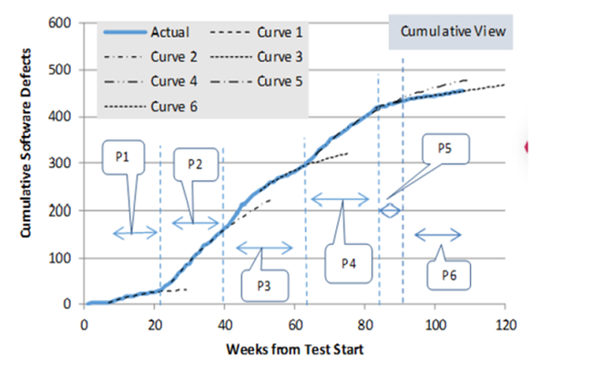
MPM supports segmented forecasting by identifying changes in defect arrival behavior and updating forecasts accordingly.
This allows the model to adapt as project conditions evolve.
MPM automatically identifies inflection points in defect arrival behavior and applies separate forecasting models to each segment.
Figure 2 / Segmented Main Prediction Model (MPM)
05 / Predictive quality
Early Prediction Capability
Forecasting Before Project Completion
One of the primary objectives of MPM is to provide useful forecasts early in the testing process.
Early prediction enables organizations to:
- Identify potential quality risks
- Evaluate schedule feasibility
- Assess testing sufficiency
- Plan corrective actions
- Improve release readiness decisions
Earlier visibility provides greater opportunity for proactive management.
06 / Predictive quality
Supporting Quality Governance
Defect arrival forecasts provide valuable inputs for quality governance activities.
Organizations can use arrival forecasts to evaluate:
- Quality trends
- Resource requirements
- Schedule risks
- Testing effectiveness
- Release readiness
Forecasting helps transform software quality management from a reactive process into a predictive discipline.
07 / Predictive quality
Relationship to Residual Defect Estimation
Residual defect estimation attempts to answer: How many defects remain?
Defect arrival forecasting addresses a related question: How many additional defects are likely to be discovered?
Together, these predictions enable quantitative assessment of release readiness.
08 / Predictive quality
Release Readiness Assessment
Residual defect percentages provide an early indicator of release readiness and operational risk. Lower residual defect levels generally correspond to higher software quality and lower post-release defect exposure.
Residual defect percentages provide a practical measure of software quality at release. The default STAR thresholds are:
| Residual Defects | Assessment |
|---|---|
| 15% | Acceptable (Green) |
| 15–25% | Caution (Yellow) |
| 25% | High Risk (Red) |
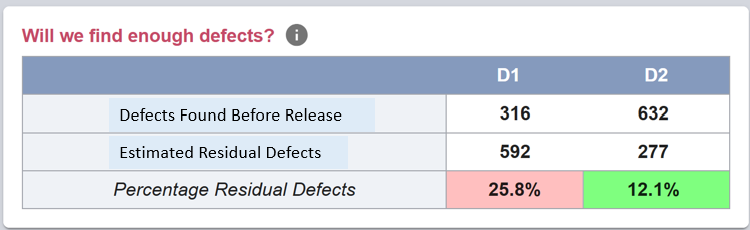
Lower residual defect percentages indicate that a larger proportion of latent defects have been removed before release.
These thresholds are the default STAR recommendations and may be customized based on organizational quality objectives and risk tolerance.
09 / Predictive quality
From MPM to CCPM
Forecasting defect arrivals represents only part of the software quality picture.
Organizations must also understand:
- How quickly defects are being resolved
- Whether resources are sufficient
- How many defects will remain open
These questions require forecasting both defect closures and defect arrivals.
This led to the development of the Closure Curve Prediction Model (CCPM).
10 / Predictive quality
Supporting Predictive Software Quality Analytics
The Main Prediction Model provides a foundation for modern predictive analytics of software quality.
By forecasting future defect arrival behavior, organizations can:
- Improve planning accuracy
- Strengthen quality governance
- Anticipate emerging risks
- Support release readiness assessments
- Enable data-driven decision-making
MPM represents an important step in the evolution from classical software reliability growth models toward comprehensive predictive quality intelligence frameworks such as STAR™.
11 / Predictive quality
Looking Ahead
Defect arrival forecasting provides only one side of the quality equation.
The next Methods page introduces the Closure Curve Prediction Model (CCPM), which forecasts future defect resolution behavior and enables prediction of open defects, release readiness, and software delivery performance.
Explore Defect Closure Forecasting